The Best Photography Spots in and around Cramlington
Where to take photographs in and around Cramlington: the curves and lakes of Northumberlandia, the River Blyth gorge and Hartford Bridge at Plessey Woods, St Nicholas' churchyard, Valley Park, East Cramlington Pond, Seaton Delaval Hall and the coast.
Cramlington is better known for its 1960s housing estates than its views, but it has some excellent places to take a camera. One of the largest human-shaped landforms in the world sits on its edge, a wooded river gorge lies just to the north, and the old village, small nature reserves and the coast are all close by. Whether you shoot on a phone or a full-frame camera, these are the spots worth knowing.
Access details were checked in November 2026. Most of these places are managed by councils, charities or the National Trust, so check opening times before you go and follow their rules on site.
Northumberlandia
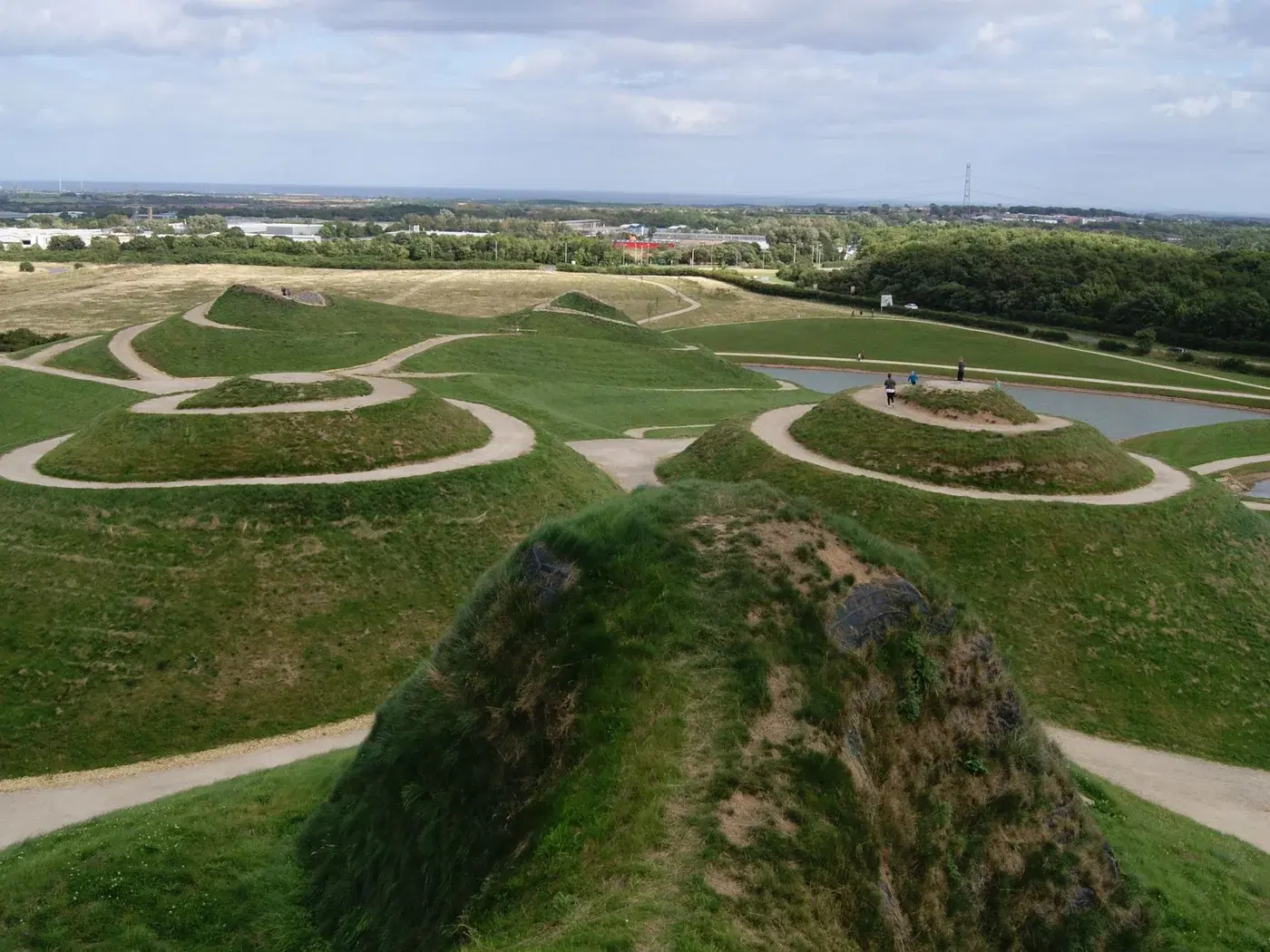
Northumberlandia, the "Lady of the North", is Cramlington's signature shot. Charles Jencks designed the reclining figure, which is 34 metres high and 400 metres long, and her grassy curves, spiral paths and lakes make strong graphic shapes from almost any angle.
- From the lakes: the water around the figure gives you foreground and, on a still day, reflections. The low paths are the place for a wide shot that shows her full length.
- From the summit: climb to her head for an elevated view back over the spiralling mounds and paths, with the town and the coast in the distance on a clear day.
- Details: look for the swirling path patterns from above, frost on the grass on a winter morning, and people on the paths for scale.
The park is open from dawn until dusk, so sunrise is easy to catch in winter but not in midsummer. Northumberland Wildlife Trust looks after the site; there is no entry charge, and the Trust suggests a £2 parking donation. The Northumberlandia Cafe at the visitor centre is there for a warm-up afterwards. Our guide to visiting Northumberlandia covers parking and accessible paths.
Best for: A wide lens helps with the full figure, but a short telephoto from the lake paths compresses her curves against the sky.
Plessey Woods and the River Blyth gorge
Plessey Woods Country Park, about ten minutes north-west of the town centre, is the place for woodland and river photography. The paths drop into the gorge of the River Blyth, and Countryfile's longer route continues along the riverbank beneath the railway viaduct, which makes a dramatic frame.
Close to the park, the historic Hartford Bridge crosses the river. It is listed at Grade II, and Historic England dates it to the 15th or 16th century, with three segmental arches and later widenings in 1688 and 1904. Shoot it from the riverside where it is safe to do so, and never from the carriageway.
For wildlife, bluebells carpet parts of the woods in spring, and the river is good for herons and dippers, with otters and kingfishers possible if you are patient. The first hour of parking is free and longer stays are charged, and the vehicle gates are open in daylight only. Our best walks guide has the routes.
Best for: Woodland under a tree canopy is dark even at midday. Bump up the ISO or bring a small tripod for the river and the viaduct.
St Nicholas' Church and the old village
The old village around the green survives in the middle of the new town. St Nicholas' Church dates from 1868 and is Grade II listed, and three 18th-century monuments in its churchyard are listed in their own right. Weathered table tombs and gravestones suit textured close-ups and black and white, and the church itself looks good against an evening sky.
It is a working church, so be respectful during services and funerals, and ask before photographing inside. Our heritage walking trail points out the other historic buildings nearby, and the historic churches guide has more on St Nicholas.
Valley Park
Valley Park, off Welbury Way, is a quieter green space within the town. Northumberland County Council has added accessible paths, nature ponds and a viewing platform, and its woodland and wildflowers draw butterflies and other insects. Roe deer use the park, so early mornings are worth a try with a longer lens. See our parks and green spaces guide.
East Cramlington Pond
On the B1326 towards Seaton Delaval, East Cramlington Pond is a small Northumberland Wildlife Trust reserve on a former claypit. It is a good spot for macro work: common darter and ruddy darter dragonflies and azure damselflies are common in summer, and frogs, toads and great crested newts breed in the pond. Stay on the paths and keep to the edges of the water.
Seaton Delaval Hall
About 15 minutes' drive east, Seaton Delaval Hall is Sir John Vanbrugh's Baroque mansion, now cared for by the National Trust. The dramatic house front and the formal gardens make strong architectural shots, and the Trust's Wagonway walk gives views back towards the hall. Opening varies by season and admission applies to the house and gardens, so check the National Trust page before you go, and follow staff guidance on photography indoors.
The coast: St Mary's Lighthouse and Blyth
The nearest coast is about 15 to 25 minutes away. St Mary's Lighthouse at Whitley Bay is a favourite with photographers, white against the sea on its tidal island. The causeway is open only at low tide, so check North Tyneside Council's crossing times first; you can shoot from the mainland at any time. Whitley Bay Live has a full guide to St Mary's Lighthouse.
Closer still, Blyth South Beach has a row of colourful beach huts and sand dunes that work well in low, raking light. Blyth Live has its own photography spots guide for the town.
Best for: On the coast, check the tide times as carefully as the weather. Rising water cuts off the lighthouse causeway quickly.
Tips for photographing Cramlington
- Light: the low winter sun suits Northumberlandia's curves and the old village stonework. Summer evenings give the longest light at the coast.
- Drones: drone flights are covered by Civil Aviation Authority rules, and most of these sites are run by organisations with their own policies. Ask the landowner or site manager before flying, and never fly near the hospital or over crowds.
- People: be considerate when photographing other visitors, especially children, and ask before taking portraits.
- Private land: some local landmarks, such as the 1749 windmill near the Plessey Checks roundabout, are on private land. Photograph them from public roads and paths only.
- Getting there: see our guide to getting around Cramlington without a car and the best days out from Cramlington for more places to explore.
Got a favourite spot we have missed? Get in touch.
Local businesses mentioned
Northumberlandia
Blagdon Lane, Cramlington, Northumberland, NE23 8AU
Northumberlandia Cafe
Northumberlandia Visitor Centre, Blagdon Lane, Cramlington, Northumberland, NE23 8AU
Plessey Woods Country Park
Shields Road, Plessey, near Bedlington, Northumberland, NE22 6HZ
St Nicholas' Church
Blagdon Terrace, Cramlington, Northumberland, NE23 6QQ
Seaton Delaval Hall
The Avenue, Seaton Sluice, Whitley Bay, Northumberland, NE26 4QR
Never miss what’s on
Join the weekly Cramlington.live digest — the best events, news and local tips, straight to your inbox. One email a week.
What's On
Remembrance Sunday in Cramlington
10:00 AM · St Nicholas Church, Blagdon Terrace, Cramlington NE23 6QQ
The Carrivick Sisters at Cramlington Folk Club
8:00 PM (doors 7:30 PM) · The Benedictine Social Centre, Glenluce Drive, Southfield Green, Cramlington NE23 6YA
Wilder Wellbeing at Northumberlandia
11:00 AM - 2:00 PM · Northumberlandia, Blagdon Lane, Cramlington NE23 8AU